
Framing Destiny
canvas or cage?

My art history textbooks are scavenged from a thrift-store. Each morning I commit a tiny sacrilege: ripping out a single page to study at a cafe.
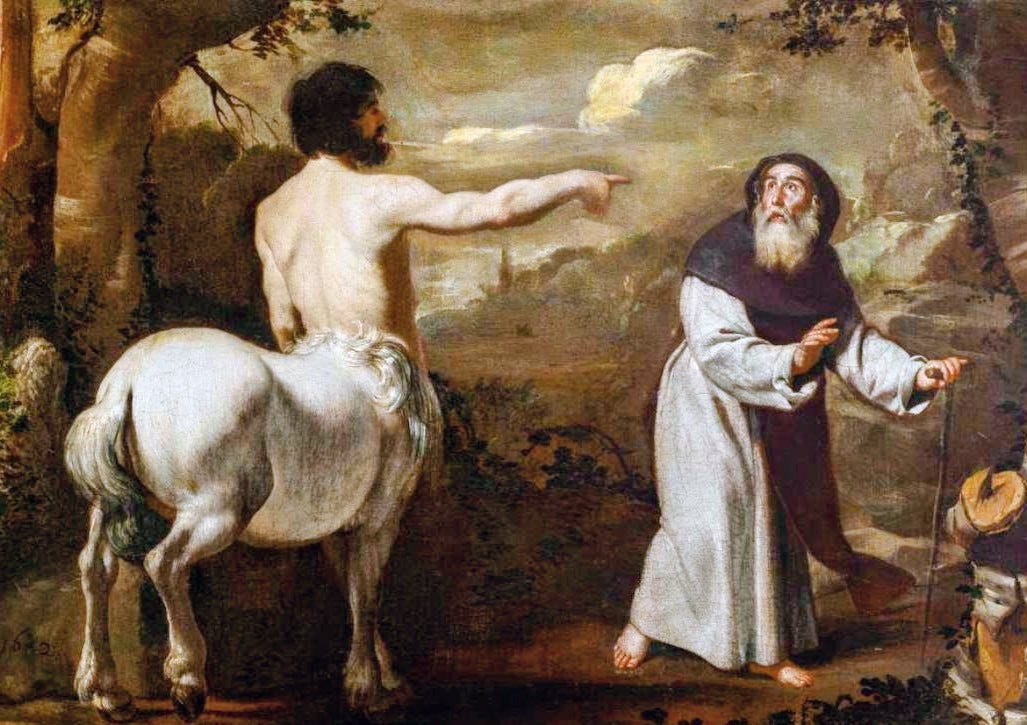
This week I was fascinated by “The Meeting of Saint Anthony and Saint Paul.”
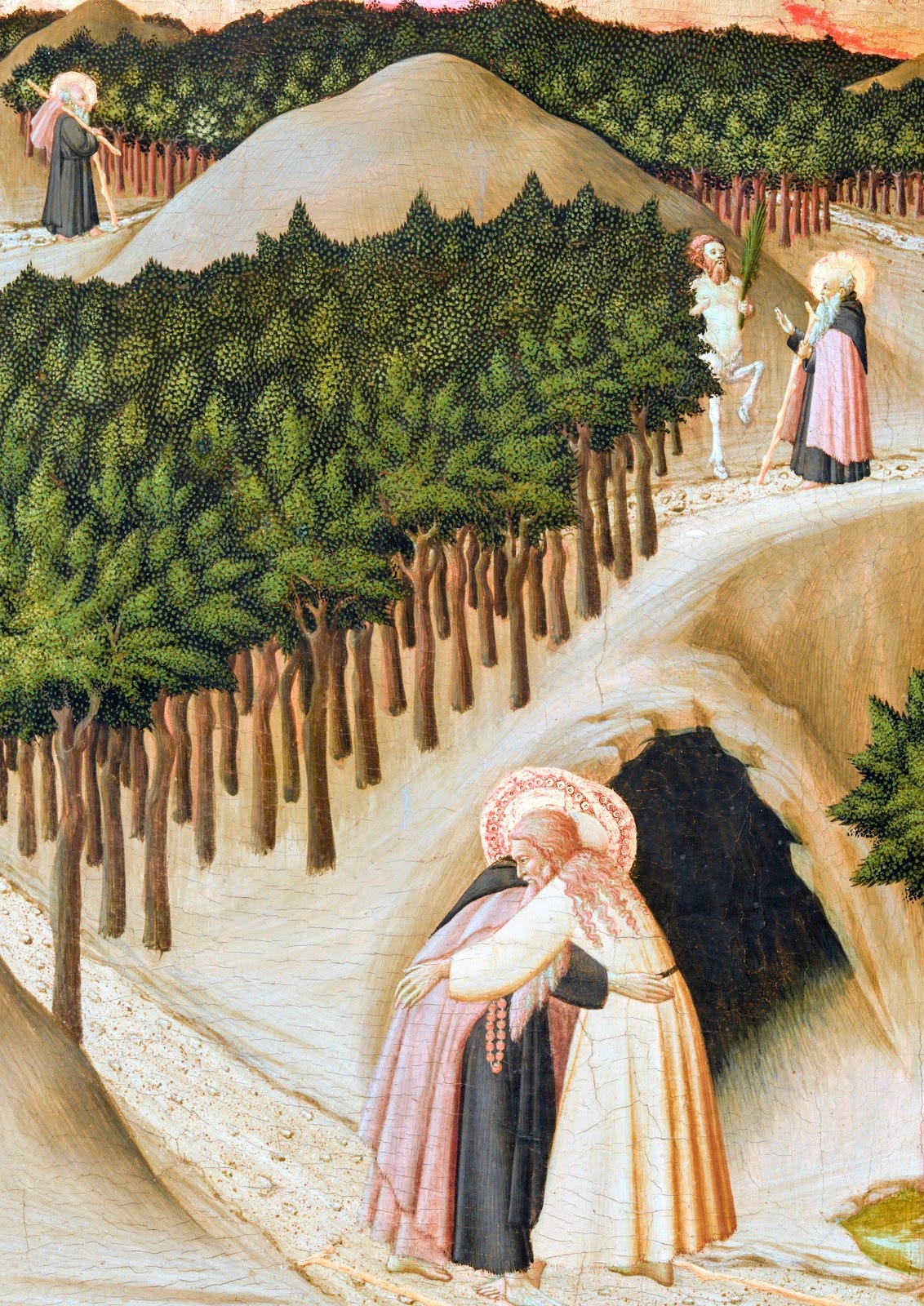
It’s a “frame tale,” a sequential story within a single canvas. Anthony’s journey (departure, centaur, climax) unfolds in one picture.
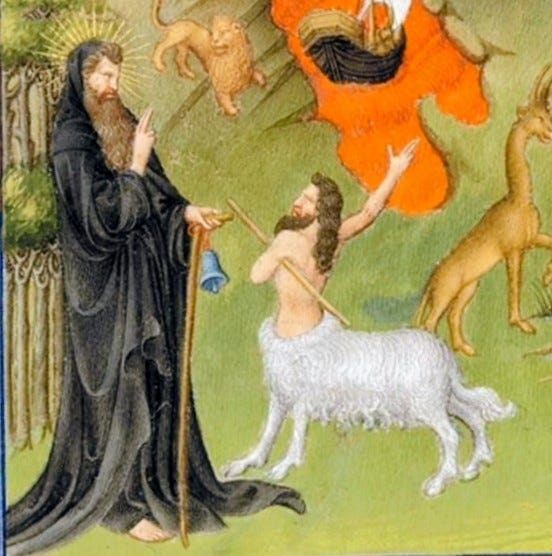
I was unfamiliar with this legend of the hermit St. Anthony: apparently he had a divine dream telling him to go further into the wilderness in search of another hermit, St. Paul. Lost in the forest, Anthony met a centaur (!!!) who pointed him in the right direction.
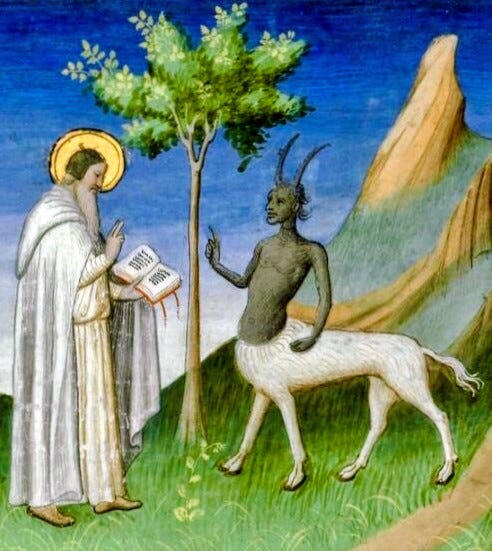
Despite 12 years of Catholic schooling, I’d never heard of saints chatting with centaurs before. It must be true, since many medieval artists recorded the encounter. (Had the nuns mentioned these hybrid creatures I might have paid more attention in Catechism.)
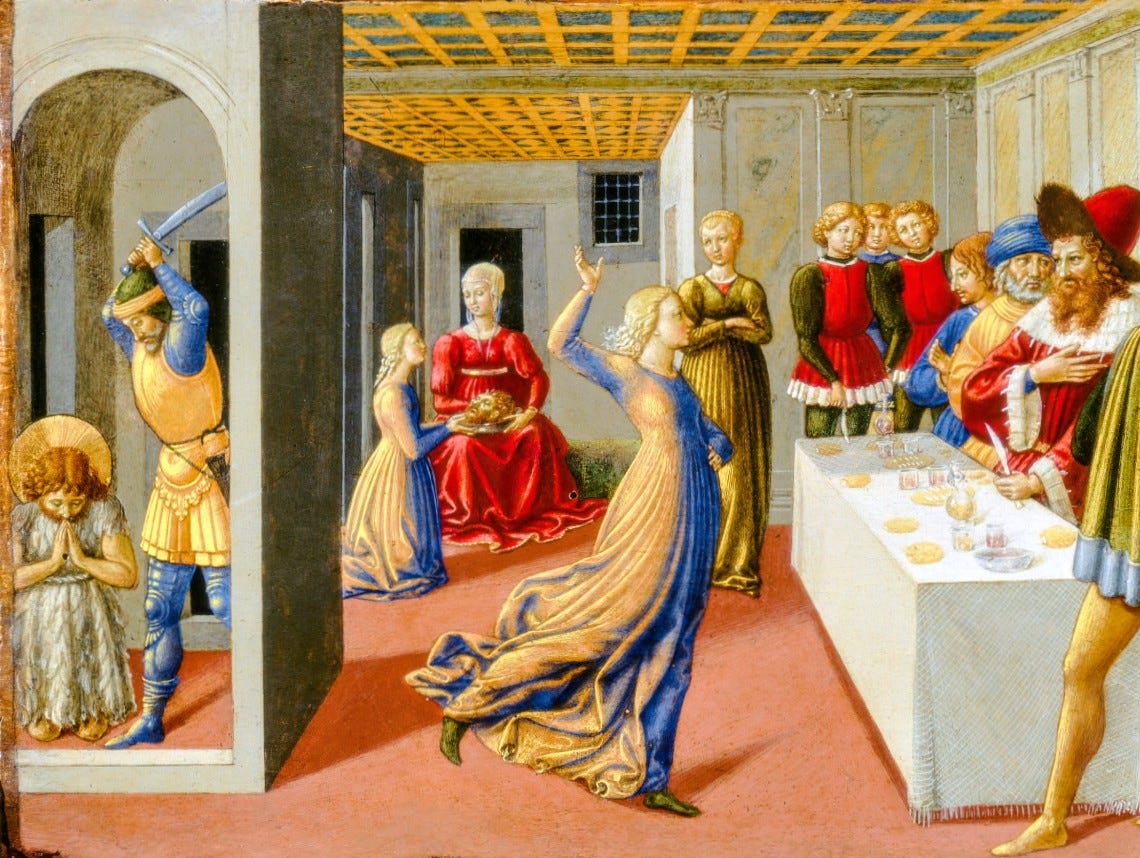
The Dance of Salome (and the subsequent execution of John the Baptist) has also inspired various frame tale paintings.
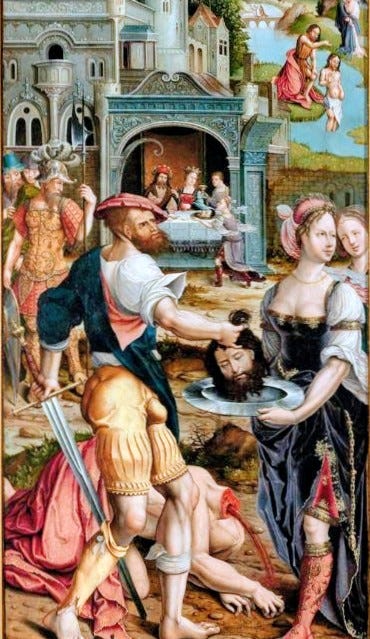
Other common examples are set in the Garden of Eden, and compress the Book of Genesis into a single canvas.
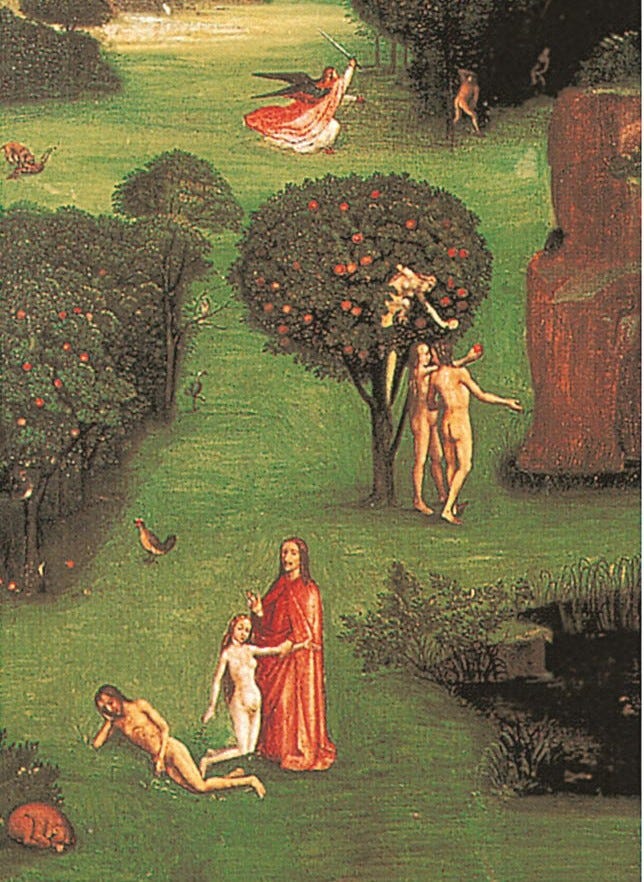
Such images depict a deterministic cosmos; a divine blueprint where Creation, Temptation, and Fall occur as a fixed chain.
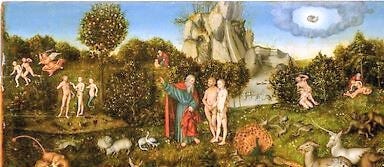
Frame Tale pictures disturb me: they imply predestination. The tragic Expulsion of Adam & Eve is shown only inches away from their Creation sketch.
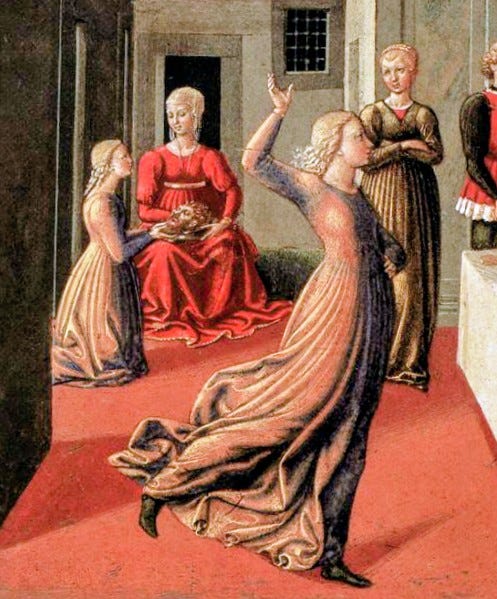
John’s severed head is already on the platter while Salome is still twirling.
These frame paintings unsettle me: they steal my hope. The Eden painting is a diagram of damnation.
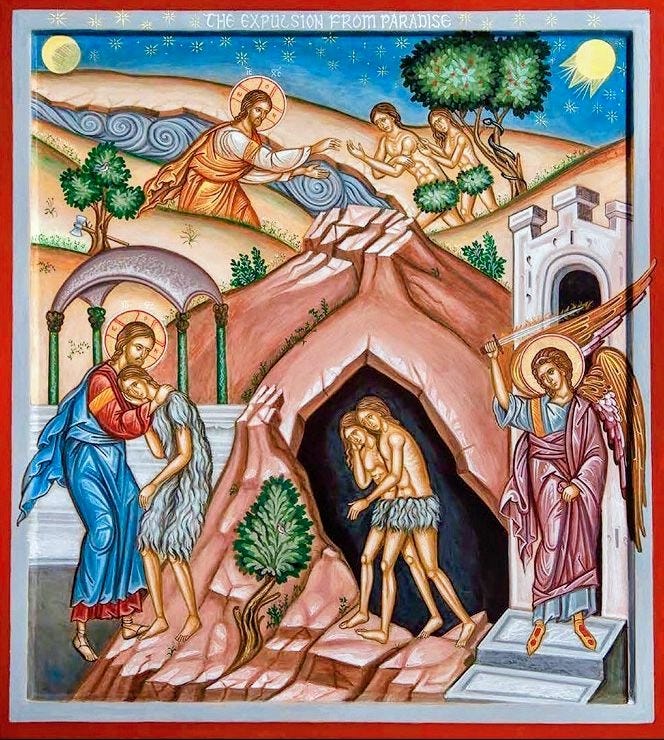
Gazing at the image evokes dread, looking into a cage of inevitability.
In contrast, every time I watch a live stage performance of “Hamlet“ I still find myself hoping that this time the young prince will prevail, and survive the final duel.
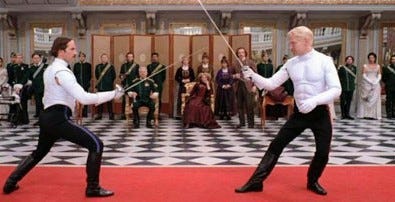
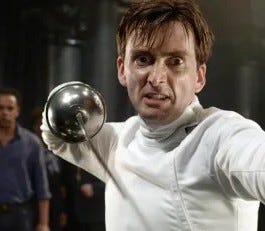
In theatre, the “what if?” suspense remains; every performance is another chance. As long as Hamlet’s sword is swinging, a new ending is still possible.
On a canvas, hope resides in the still-wet paint in the artist’s studio, just before the next brushstroke.
I must step out of the painting and seize the brush (or in my case, the ballpoint pen).
I am not the spectator of my life’s story. The present moment is pure possibility, not fated karma.
The unframed story is not pre-destined. It is being drafted fresh, this very day.
And still, I want to meet a centaur.
______________________
Thanks for reading this newsletter!
There are links at the bottom of the page: Like, Comment, and Share. Your responses attract new readers, and I’d love to hear your thoughts about the essays.
Yes, the centaur! That is wild, I’ve never heard of that. I appreciate your take on the different ways a tale hits you in the single canvas portrait vs a play - there is always hope (& dramatic tension) when you watch it in action, no matter how well you know the story. But I also enjoy these compilation paintings, as an intriguing way to view the progression of time, and to see the person’s innocence/unknowing despite standing literally inches away from their fate.
Thanks for bringing Art to Substack, it’s always a pleasure to read your explorations!
got me wikipedia'ing the plot of the film "The Flash." "...already on the platter while Salome is still twirling..." good one!