
Sirens in the Mesh
Our Toxic Garden

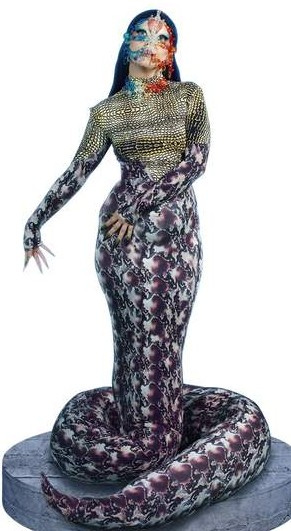
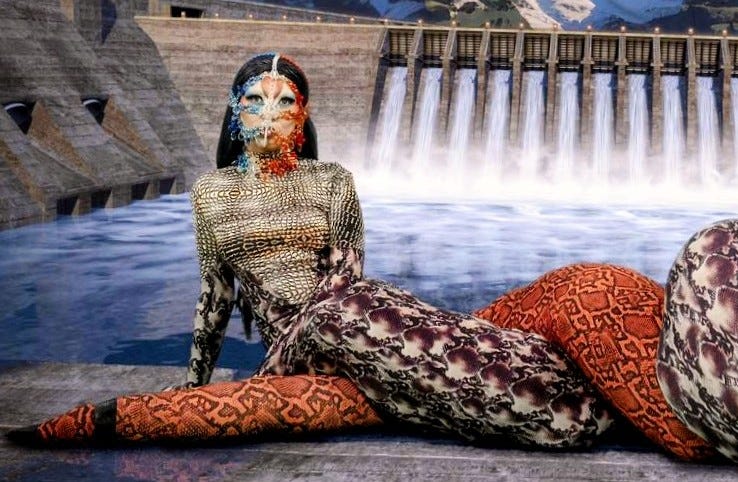
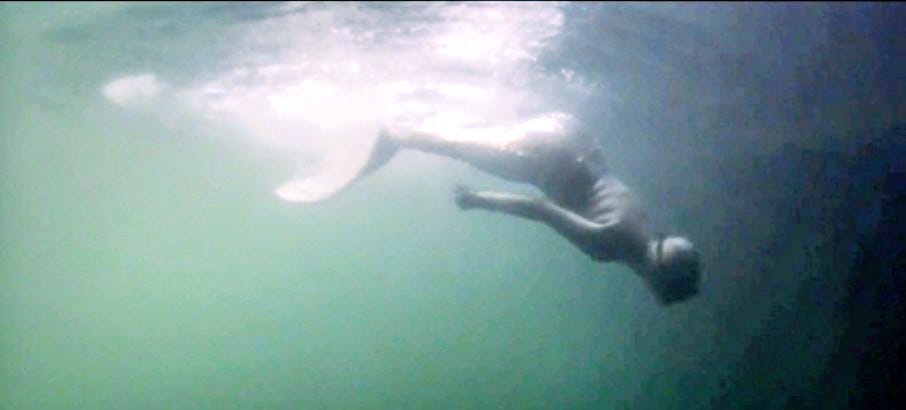
A hybrid human/serpent glides through the submerged ruins of a Cold War naval base. She moves through rusted girders and pylons encrusted with algae.
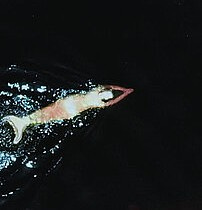
The artist Emilija Skarnulytė performs in her films as a Siren, a mutated aquatic “archaeologist from the future.” She swims open waters with a silicone mermaid tail.
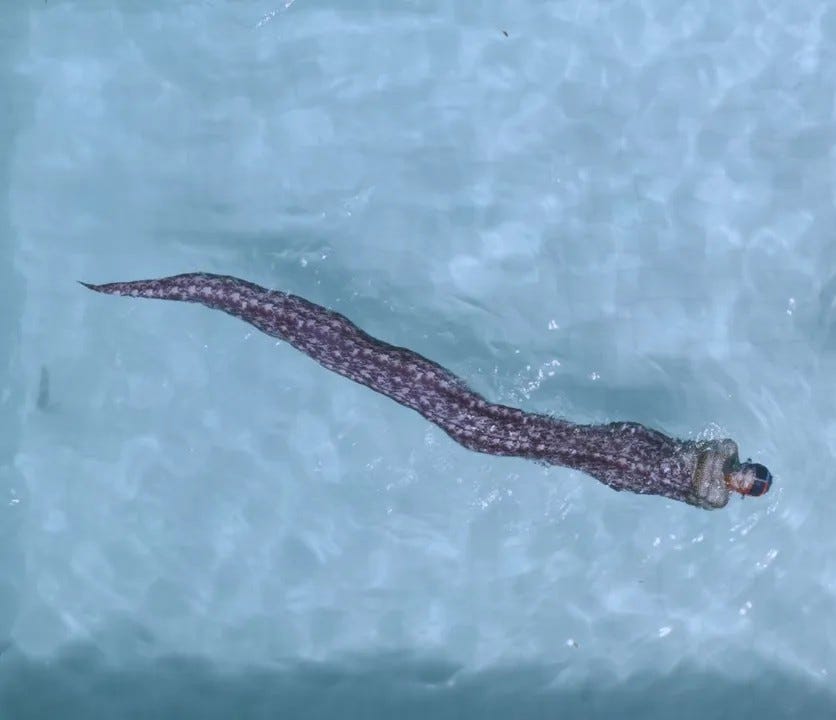
I watch hypnotized – her eerie films follow this Siren swimming through the relics of our civilization: an old NATO submarine base, an endangered river, and an obsolete Soviet nuclear station.
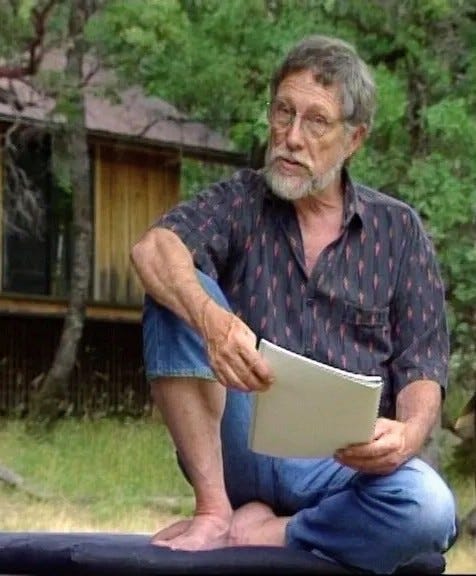
I love Gary Snyder’s poetry, the way he stakes his blunt words to the gritty reality of his life in the woods. In the 1960s he raised the alarm about environmental destruction. He preached a “return-to-the-Garden” approach, a simpler lifestyle modeled on that of our ancestors.
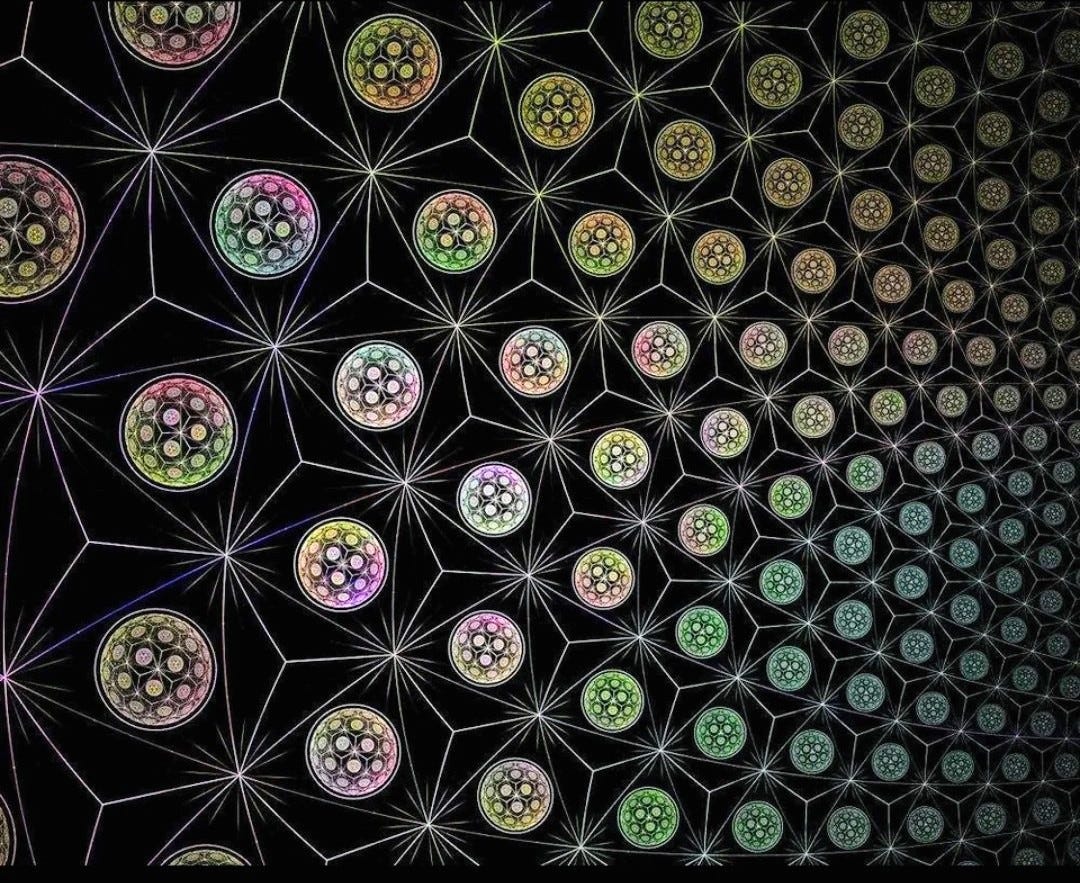
Snyder, a student of Asian culture, used the metaphor of “Indra’s Net of Jewels” to describe an environment in which every element is interdependent, an infinite lattice where each gem reflects all the others.

He translated a 7th‑century Chinese hermit whose poems praise a life in the remote wilderness:
Once at Cold Mountain, troubles cease–
No more tangled, hung-up mind.
I idly scribble poems on the rock cliff,
Taking whatever comes, like a drifting boat.
For many years Snyder taught at the University of California; when he retired in 2002, his job went to Timothy Morton, another ecology writer with a starker perspective.
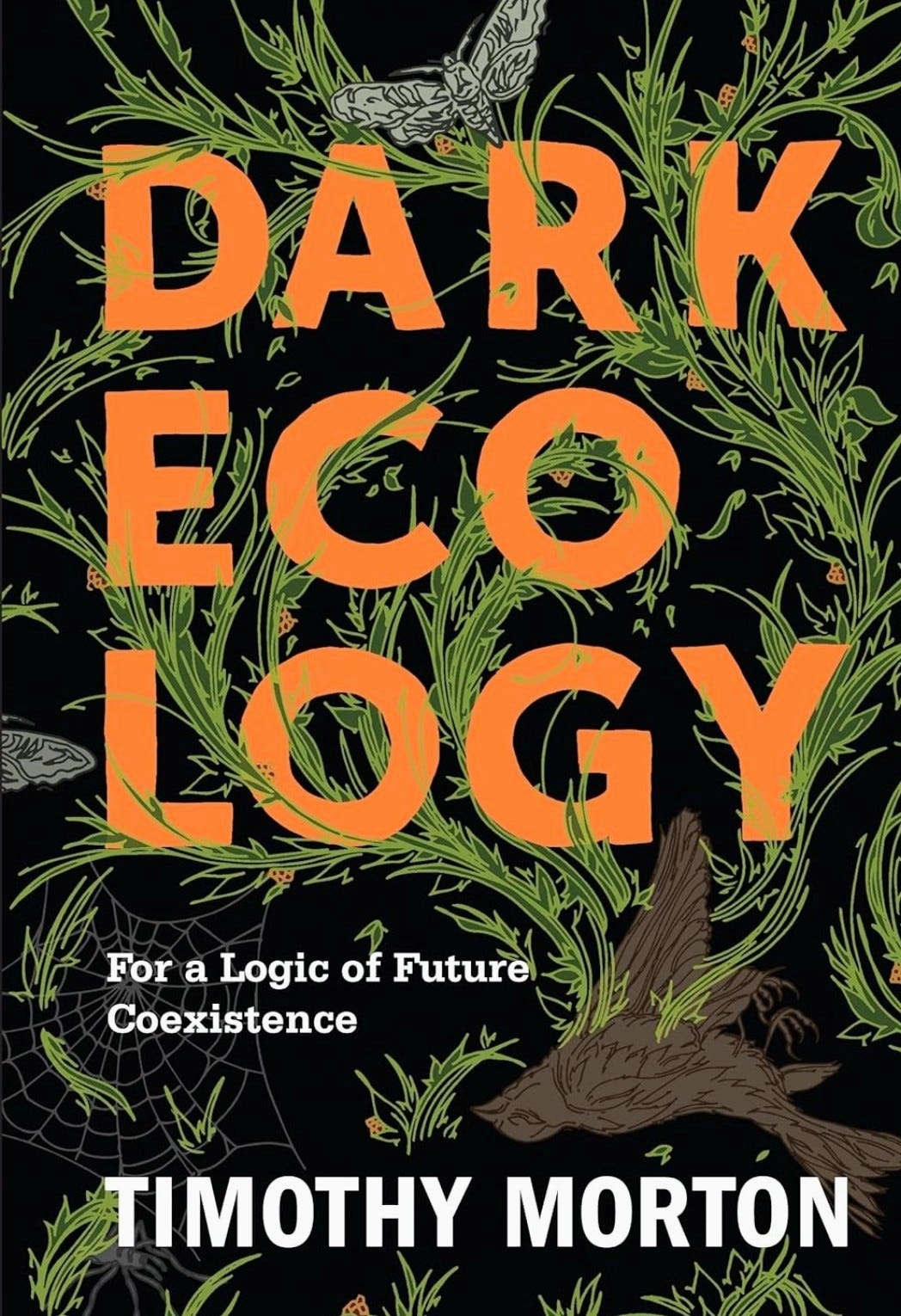
Morton dismisses Snyder’s “back-to-Nature” slogan as a naive Romantic fantasy. The environmental catastrophe triggered by our fossil fuel civilization has swelled for two centuries and cannot be escaped. We are already in the midst of ongoing global warming and a mass extinction event.
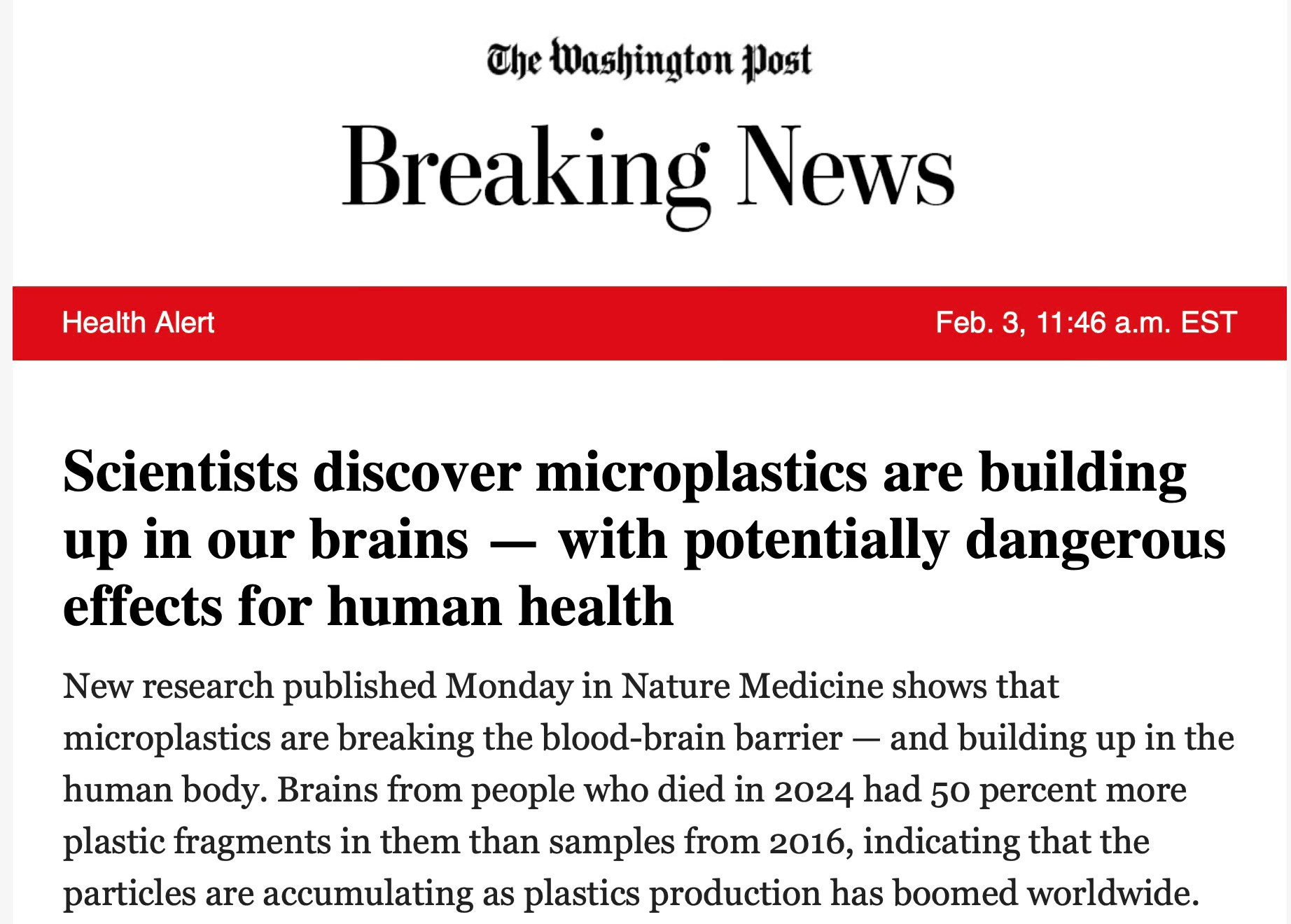
Scientific studies have detected microplastics in the blood and organs of humans and other animals.
Morton also refers to Indra’s Net, but renames it The Mesh, a vast barbed tangle in which we are, yes, enmeshed. We are all cyborgs now, children born with pollutants in our blood. The uncanny Siren swims through the Mesh as her native habitat.
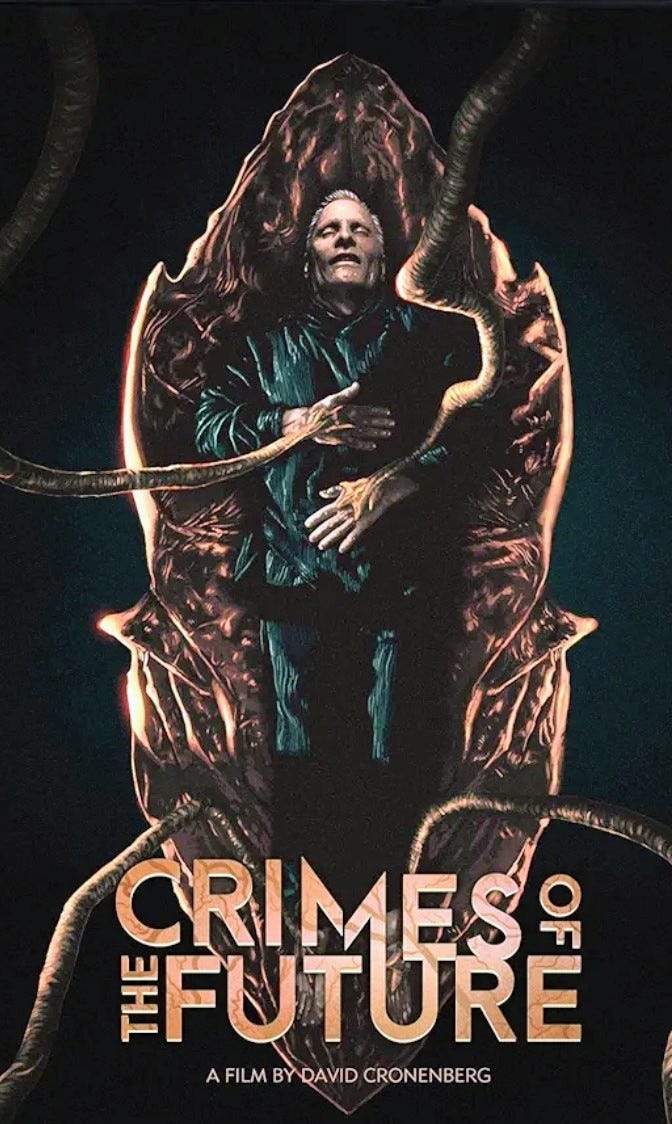
David Cronenberg’s film “Crimes of the Future” pushes further. Set in our future, the film opens with a boy eating a plastic wastebasket; humans are evolving to digest the plastic saturating the environment.
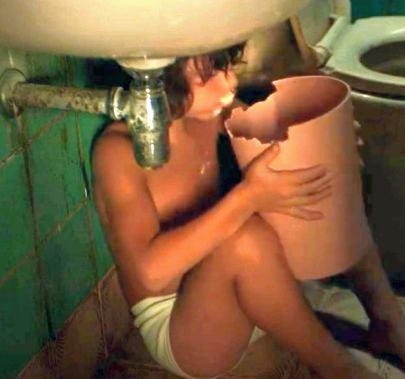
This is the Mesh Morton and Emilija Skarnulyte describe, where humans and every other species are inevitably altered by toxins and climate distortions.
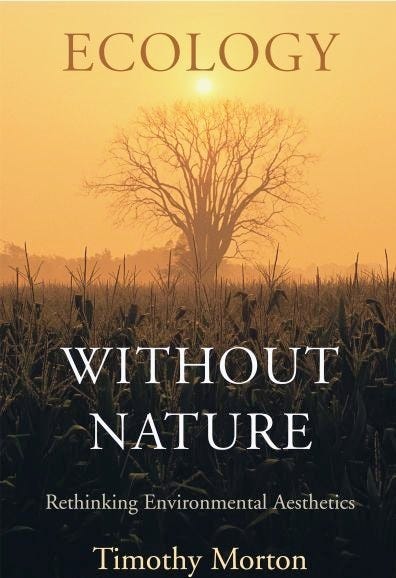
Morton has a famous quote:
‘Nature’ is a word for a world that no longer exists.
Like Gary Snyder, I wish we could all return to the Garden. But like Morton, I suspect that option is forever gone.
Refuse false hope — but I still insist on lucid presence while facing a toxic landscape. This starts with acknowledging the true state of the world we’ve shaped.
We must act with integrity, the only way to keep our humanity, even as we mutate.
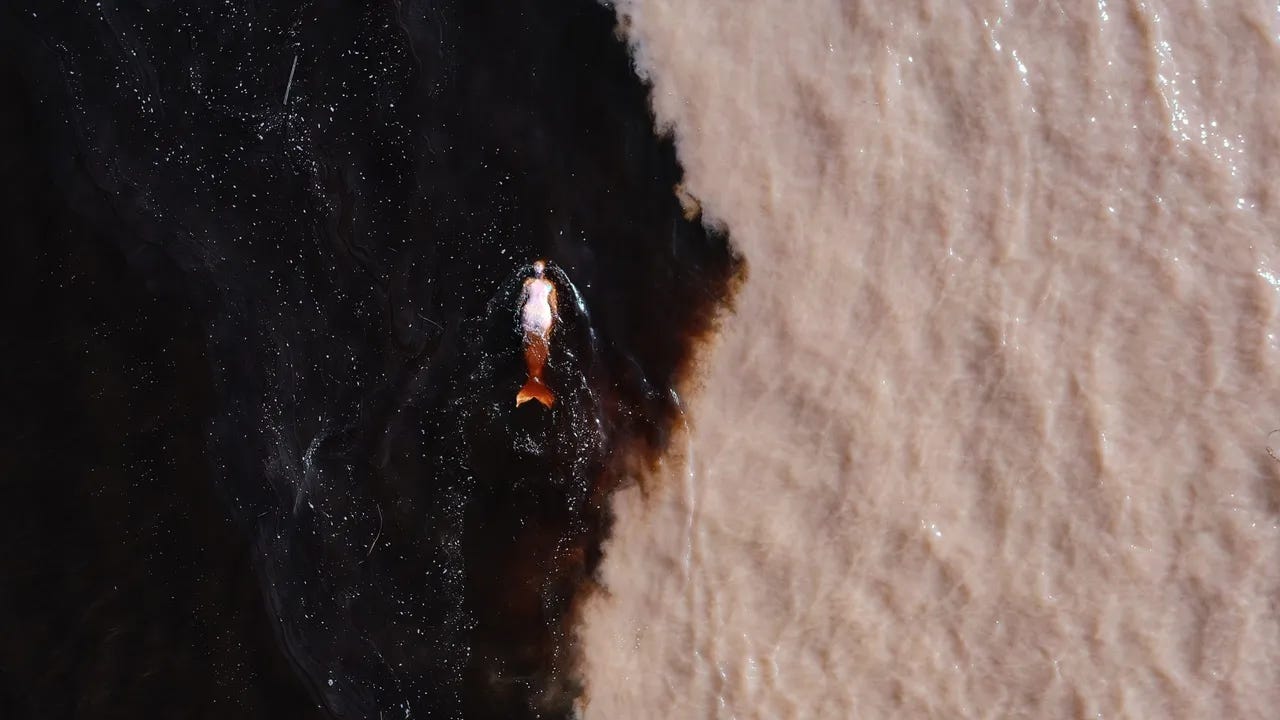
The Siren archaeologist swims through the wreckage of our technology and may be a genetic adaptation to our altered future.
She is a witness to what we have made, and what we might still make, of our turbulent world. We swim in darker waters now.
__________
NOTES
All Siren images are copyright the artist Emilija Skarnulyte. More details here:
https://www.sieshoeke.com/artworks/emilija-%C5%A1karnulyt%C4%97-sirenomelia-2018
___________________________
Thanks for reading this newsletter!
There are links at the bottom of the page: Like, Comment, and Share. Your responses attract new readers, and I’d love to hear your thoughts about the essays.
I quite like the bumper-to-bumper pacing of this colloquy - gets me looking for a 'b' side - maybe with the 'house on fire' obverting to something sanguine - anyway bravo! it's beautifully made!