
TechnoEvolution (?)
Humans, Tools, and Human/Tools

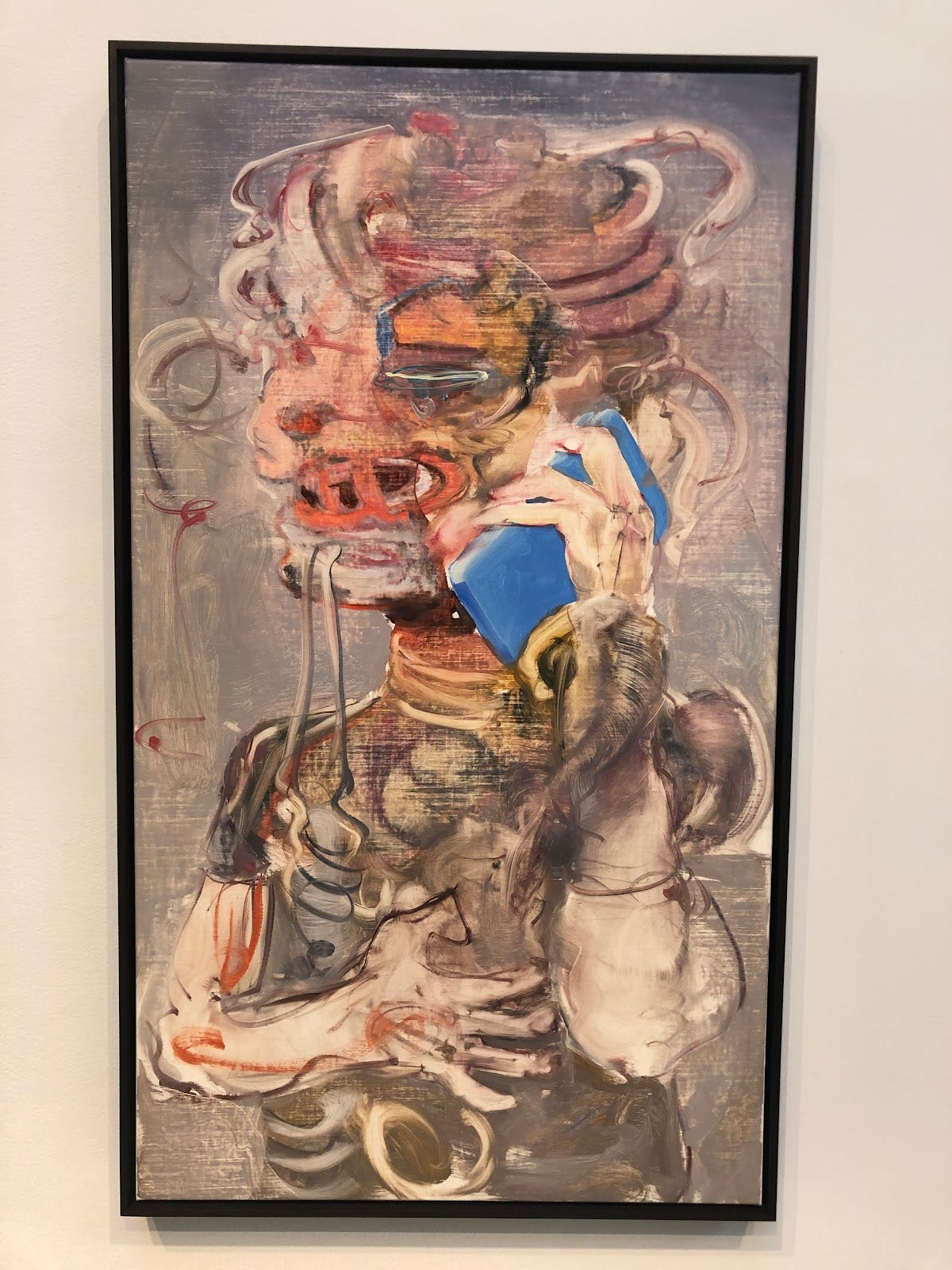
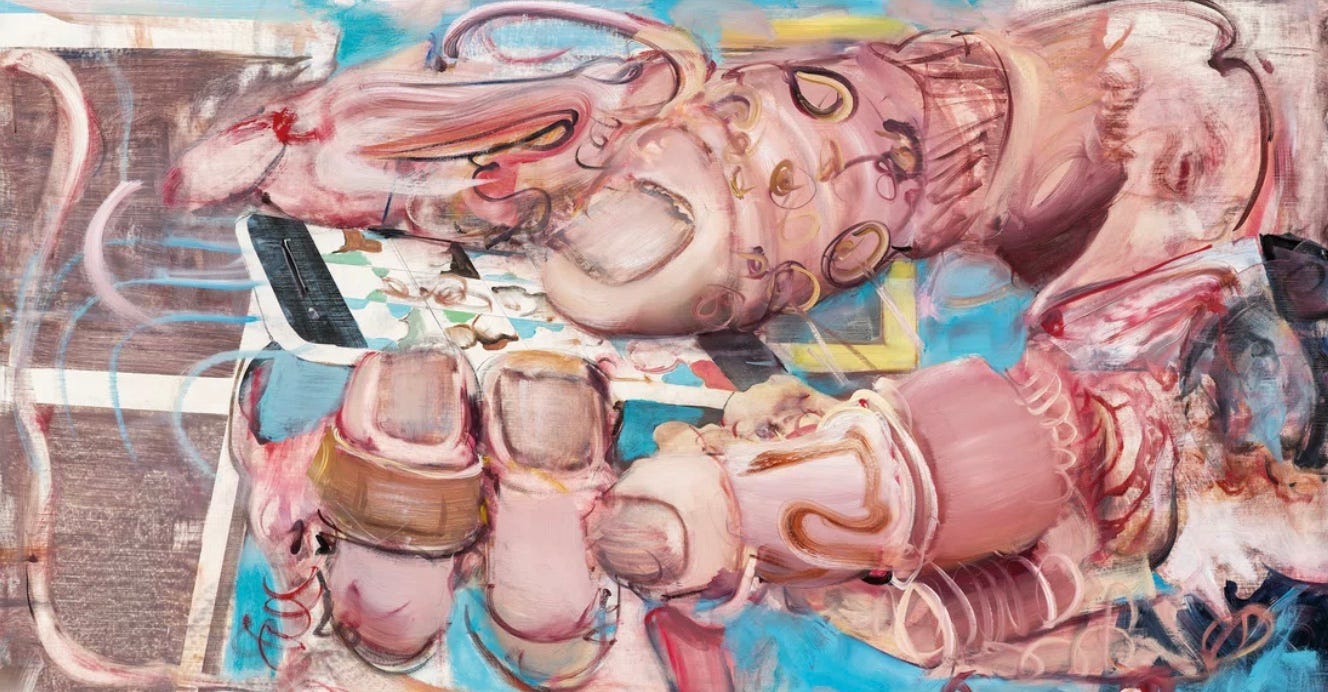
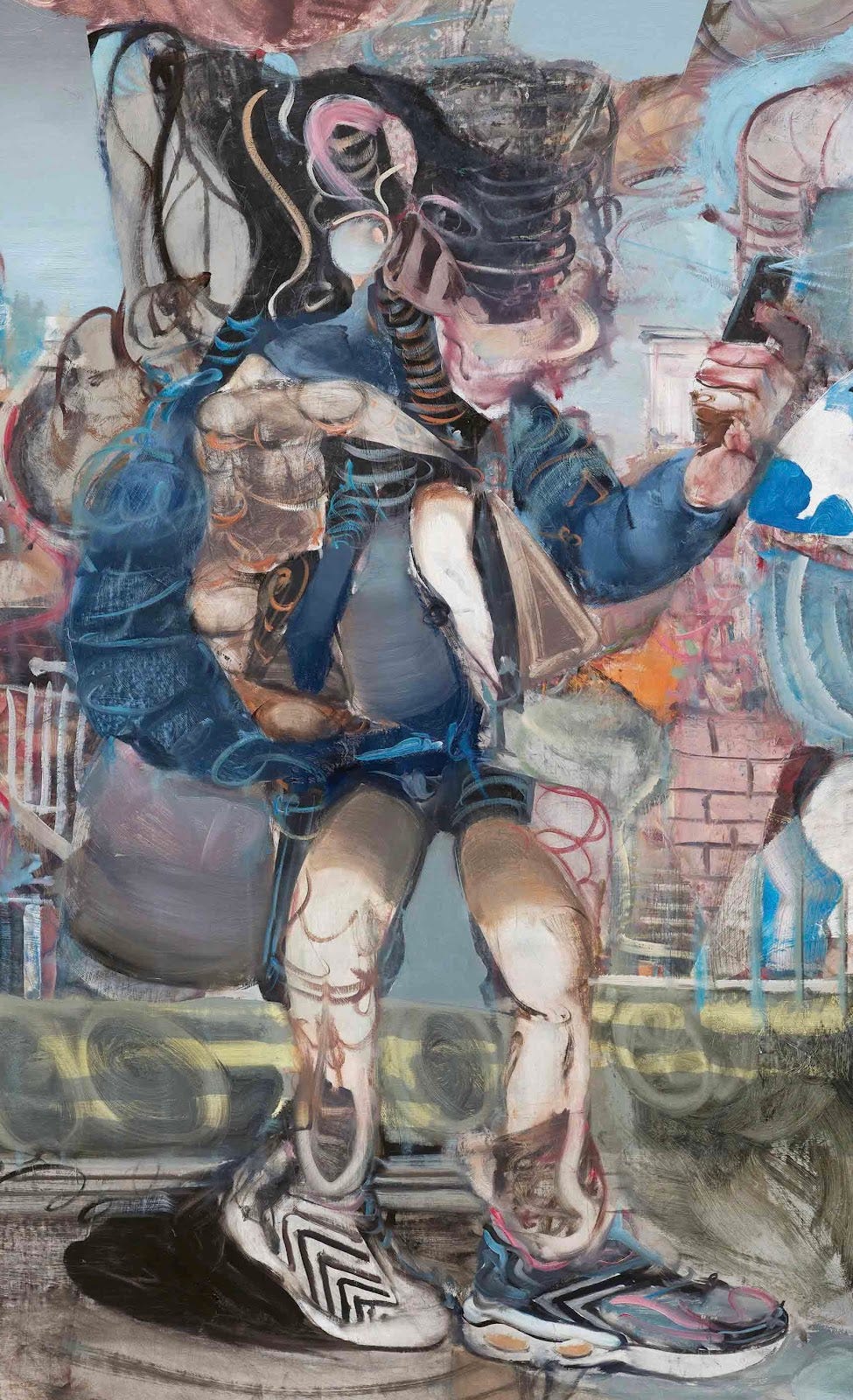
Walking into Pace Gallery without any expectations, I am immediately struck by Adrian Ghenie’s latest works. His large paintings, deliberately grotesque, depict the harsh reality of our cellphone addiction.
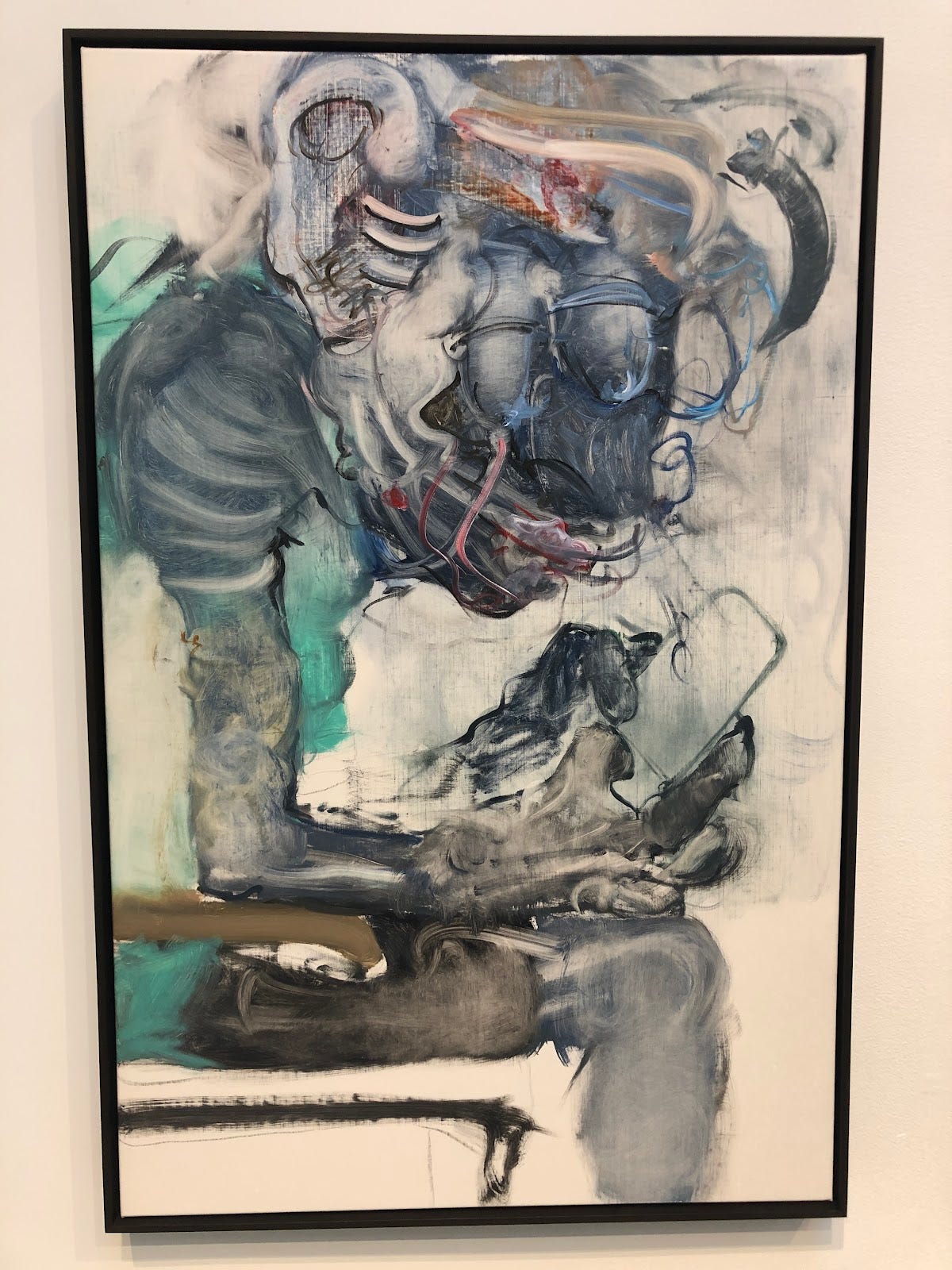
My response is visceral — unconsciously I take a deep breath and straighten my spine, as the paintings reflect an uncomfortable aspect of my daily self.
Ghenie’s pictures display the raw anatomy of the “cellphone hunch” — the posture that has afflicted our species over the past couple of decades. His show is sarcastically titled ‘Brave New World.’
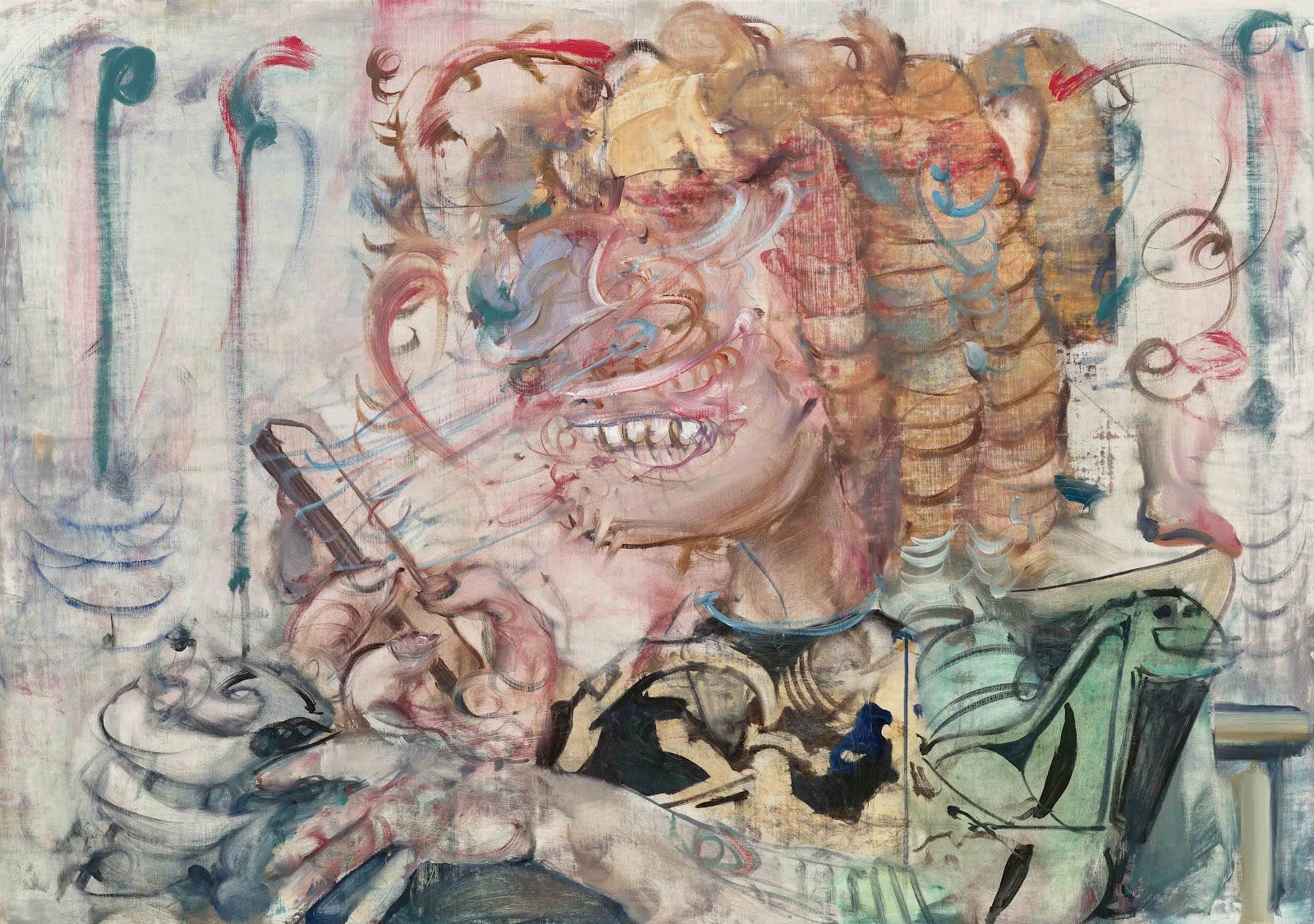
One of his scenes mocks how visitors to museums nowadays give more attention to their handheld screens than to the masterpieces on the walls.
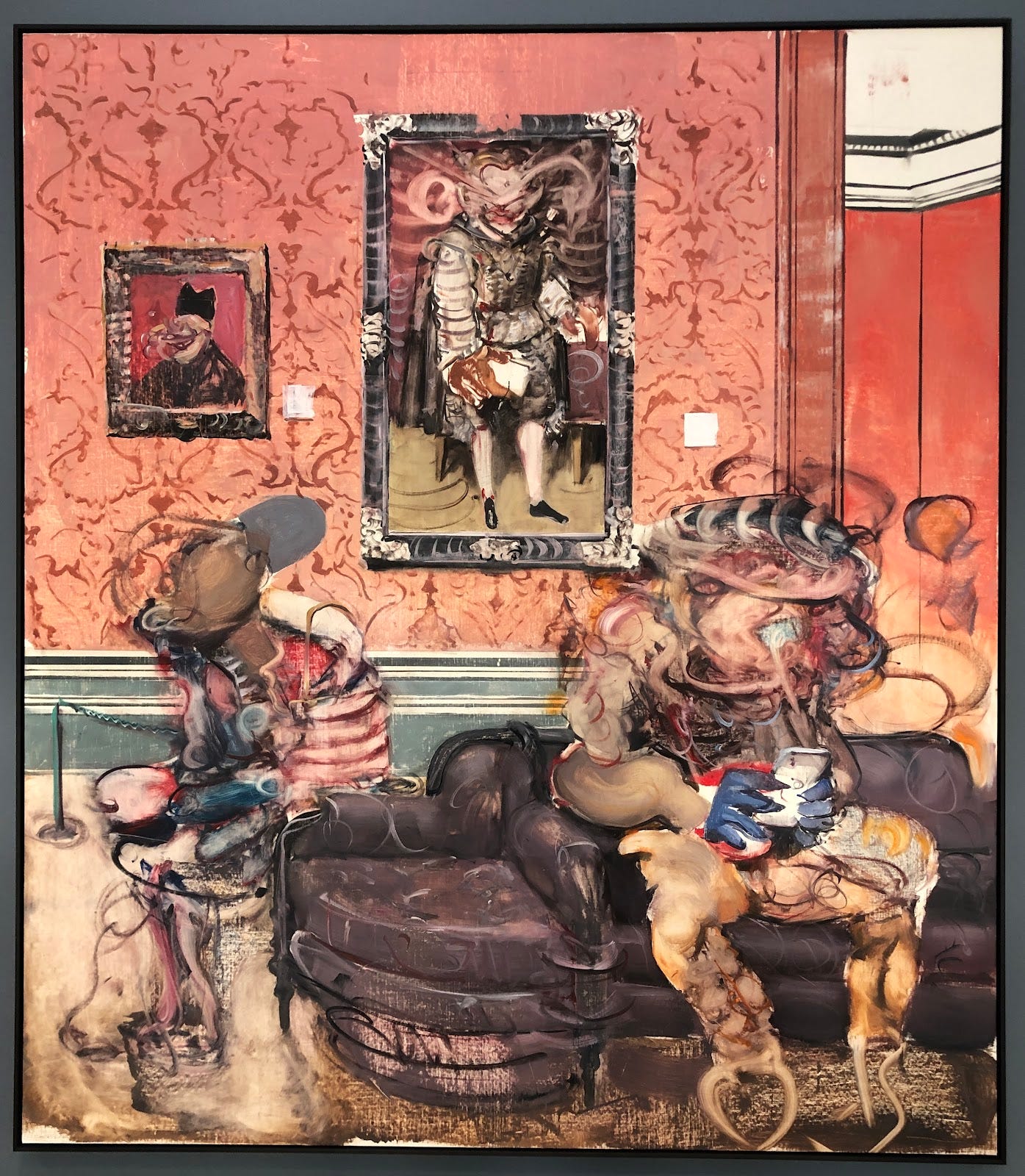
Our biology has been hijacked by our technology. Ghenie points to the worst aspects of the cyborg culture we’re creating: the future depicted by ‘The Borg’ creatures of the Star Trek universe, whose flesh has been warped by silicon circuitry.

In the past, Gnostic religions sought to escape their flesh-and-bone cage through mysticism, and today cybernetic transhumanists seek to do the same by uploading their consciousness to the iCloud. These are escapist strategies designed to numb their Awareness of physical sensation and mortality.
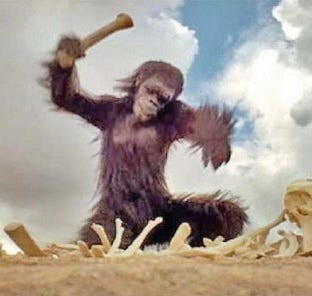
In revulsion at this possible future, my mind instinctively leaps backward through the evolutionary timeline, to our primate ancestors. Our hominid species adapted over millennia to move across the terrains of a natural wilderness. They were organisms with neural and muscular systems fitted to their complex environment.
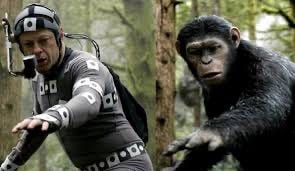
I think of Andy Serkis, the actor who has pioneered motion-capture performances for cinematic depictions of apes. He did gorilla movements for the digitized 2005 version of King Kong, and later performed as the chimpanzee Caesar in the recent Planet of the Apes trilogy.
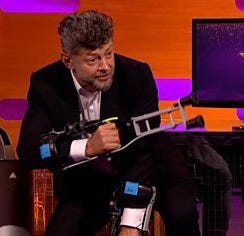
On YouTube there are fun videos of Serkis demonstrating the different quadruped movements he learned (gorillas thrust their pelvises out, while chimps tuck).
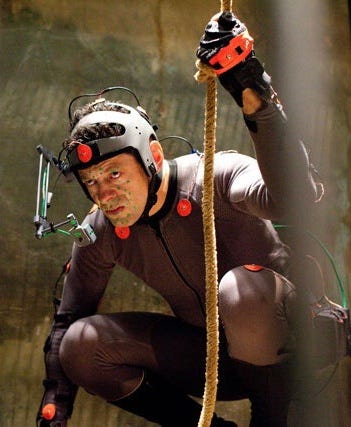
Serkis looks much more natural scrambling ape-like across the grass than do most bipedal folks on Manhattan streets in their tunnel-vision shuffle. Pedestrians don’t even look up from their phones while crossing the street.
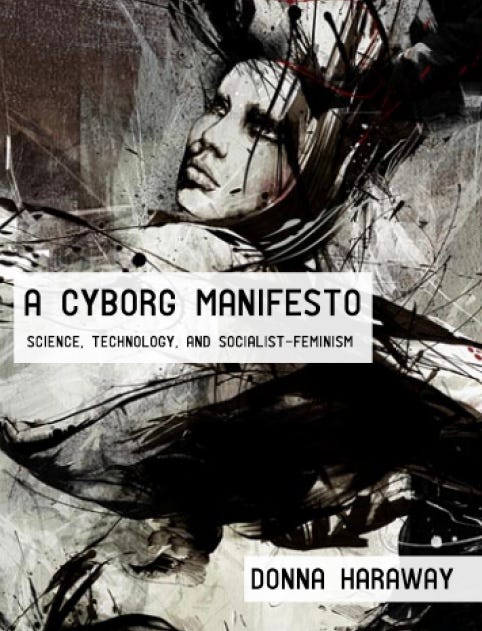
To be fair, there are more optimistic visions of cyborgs. In 1985 feminist philosopher Donna Haraway published her “Cyborg Manifesto” arguing that potential hybrids offer us more fluid options for identity, an opportunity to blur boundaries and to build new coalitions across diverse communities.
The central question is: does the tech make us more Aware, or less? I don’t think there’s a global answer, but different responses to specific contexts.
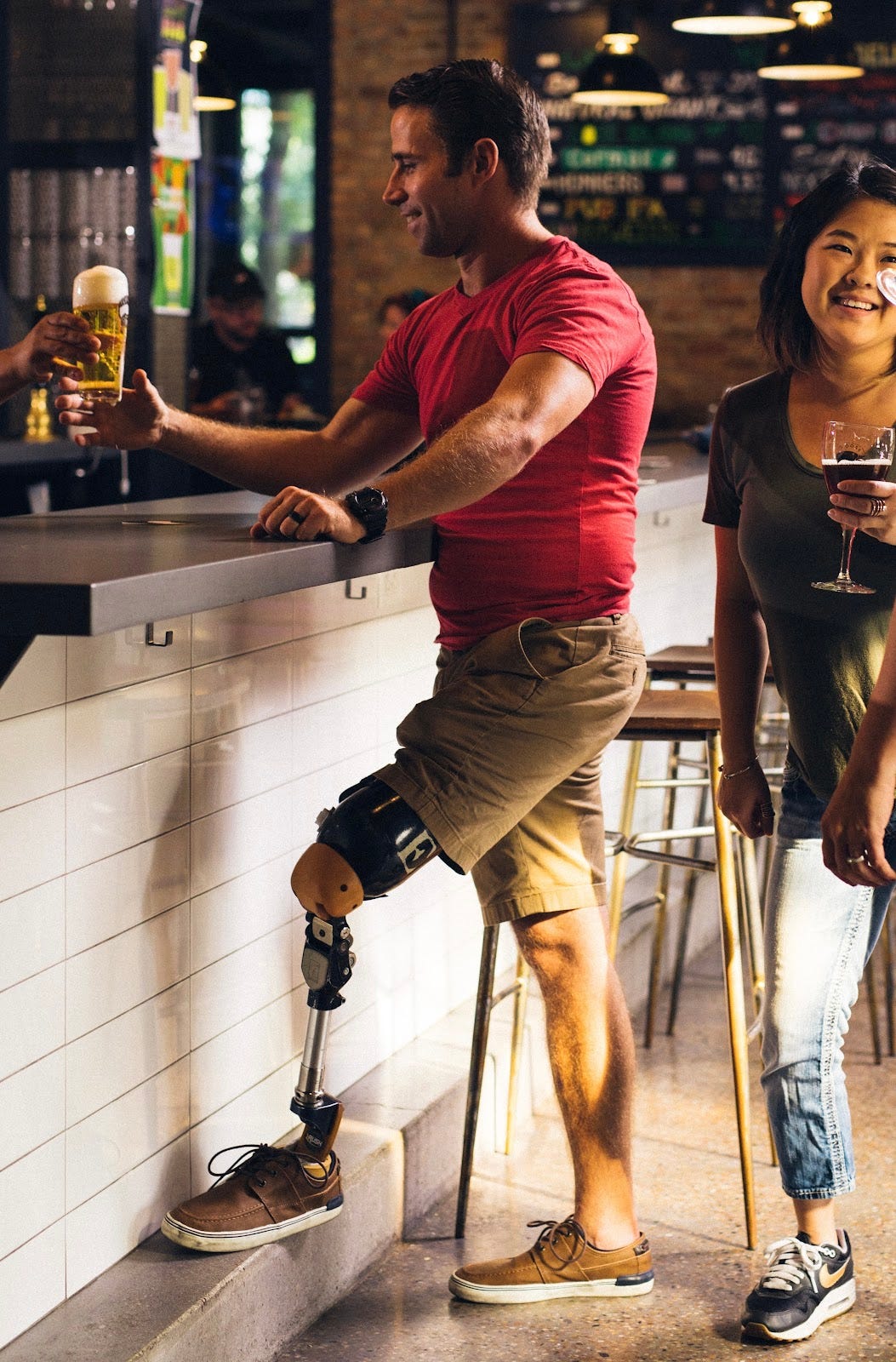
Does the tech serve us by enhancing Awareness, or simply numb us to tactile reality?
I’ve been wearing eyeglasses for fifty years, a definite enhancement to my vision. And sometime in the near future I’m going to require artificial joints implanted to replace my arthritic knees. Cardiac patients walking around with an electronic pacemaker undoubtedly prefer it to the alternative.
Beyond these essential tools though, there is still debate about biotech enhancements, and room for personal choices. Not everyone in the deaf community desires a cochlear implant — there are many ways of being-in-the-world, and some may choose to skip any technological “fixes.”
The “cellphone hunch” reduces the awareness of our animal bodies navigating in a wider physical environment. The iPhone gripped in a cramped hand, in turn triggers a cramped body.
So… I’ve started including “animal flow” primal movements in my weekly exercise regimen. This involves lots of odd quadrapedal movements and rolling around on my yoga mat. Basically, a return to kindergarten playtime.
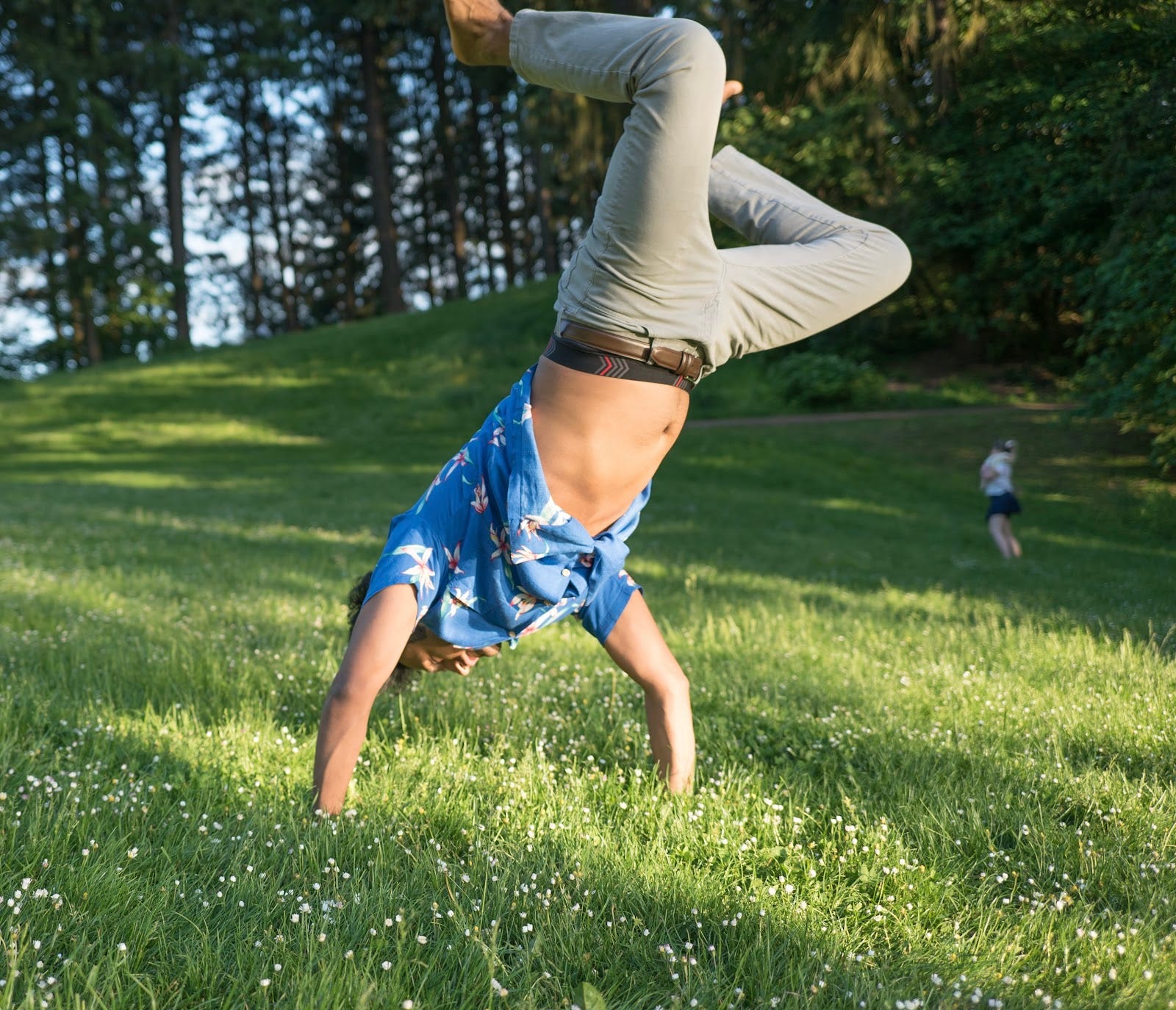
At the age of 58 I’ve done my first few (very sloppy) cartwheels. I’ve vowed to avoid the cellphone hunch at all costs!
__________________
NOTES:
All paintings shown are copyright Adrian Ghenie. Details of his current exhibit at Pace Gallery here:
https://www.pacegallery.com/exhibitions/adrian-ghenie-brave-new-world/
Here’s a clip of Andy Serkis walking like an ape (in a nice suit!):
Andy Serkis on how to walk like an ape - The Graham Norton Show: 2017 - BBC One
For resources on primal movement workouts, try these:
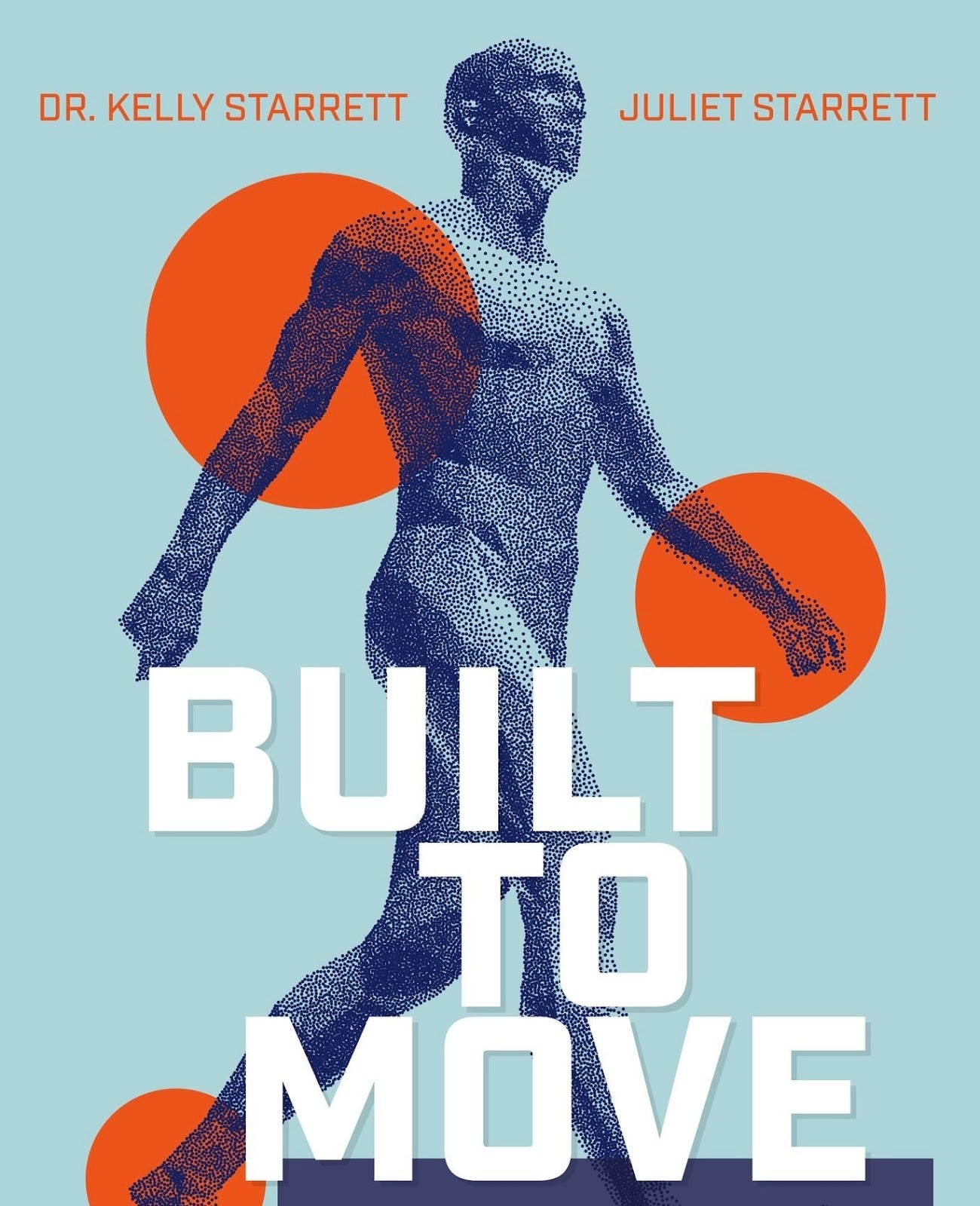
The book “Built to Move” by Kelly & Juliet Starrett
Gold Medal Bodies (GMB) has great well-structured programs:
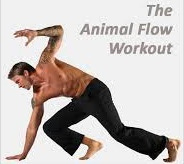
And if you’re already very fit, try Mike Fitch’s Animal Flow program:
‘that awful Francis Bacon disgust that is somehow compelling’ - just like the succubus screens we peer into?
Love those Adrian Ghenie works - I can see Italian futurism, Duchamp, Guston and Bacon in these but given new life/twists. Having recently had spinal fusion I find myself sitting, standing, walking so differently and wish I could incorporate primate rolls in my physio!?